Vintage Vietnam War Tropical Combat Trousers Pattern Accurate Identification Guide


U.S. Vietnam War Tropical Combat Trousers
Accurate Pattern Identification Guide (1st–6th Pattern)
The Tropical Combat Trousers were designed specifically for jungle warfare in Vietnam. They were lightweight, fast-drying, and built for mobility — not heavy reinforcement.
All patterns share a relatively lightweight construction throughout.
Identification is based on:
-
Fabric (poplin vs ripstop)
-
Fly type (button vs zipper)
-
Cargo pocket construction
-
Drain holes
-
Internal pocket tie tapes
-
Waist adjustment tabs
1st Pattern (1963–1964)
Earliest jungle trouser issued.
Construction Features:
-
5.5 oz wind-resistant cotton poplin (smooth weave)
-
Button fly
-
Large bellows cargo pockets
-
Internal tie tapes inside cargo pockets
-
Early production often without drain holes
-
Side waist adjustment tabs
-
Slanted front pockets
-
Rear flap pockets

2nd Pattern (1965)
Refinement of the original design.
Construction Features:
-
Cotton poplin
-
Button fly
-
Cargo pocket drain holes added
-
Internal tie tapes retained
-
Waist adjustment tabs retained
-
Same overall pocket configuration
The addition of drain holes is the primary visual update.


3rd Pattern (1966–1967)
Minor construction refinements.
Construction Features:
-
Cotton poplin
-
Button fly
-
Cargo pocket drain holes present
-
Internal tie tapes retained
-
Waist adjustment tabs retained
-
Slight pocket proportion adjustments
Still lightweight poplin construction.


4th Pattern (1967–1968)
Transitional poplin production before ripstop becomes standard.
Construction Features:
-
Cotton poplin
-
Button fly
-
Cargo pocket drain holes
-
Waist adjustment tabs retained
-
Internal tie tapes removed
Very similar to 3rd pattern — differences are subtle and often require close inspection.


5th Pattern (1968–Early 1970s)
Introduction of ripstop fabric.
Construction Features:
-
Ripstop cotton (visible grid weave)
-
Button fly
-
Cargo pocket drain holes present
-
Waist adjustment tabs retained
-
Internal tie tapes largely discontinued
Ripstop + button fly = 5th pattern
This is the most commonly encountered Vietnam-era jungle trouser.


6th Pattern (Late Vietnam / Early 1970s)
Final wartime evolution.
Construction Features:
-
Ripstop fabric
-
Zipper fly (replaces button fly)
-
Cargo pocket drain holes present
-
Waist adjustment tabs retained
-
Simplified internal finishing
The zipper fly is the defining structural change.
Ripstop + zipper fly = 6th pattern.


Fabric Summary
Poplin (1st–4th Patterns)
-
Smooth weave
-
No grid reinforcement
Ripstop (5th–6th Patterns)
-
Visible cross-hatch reinforcement grid
-
Tear-resistant weave
Camouflage Variants
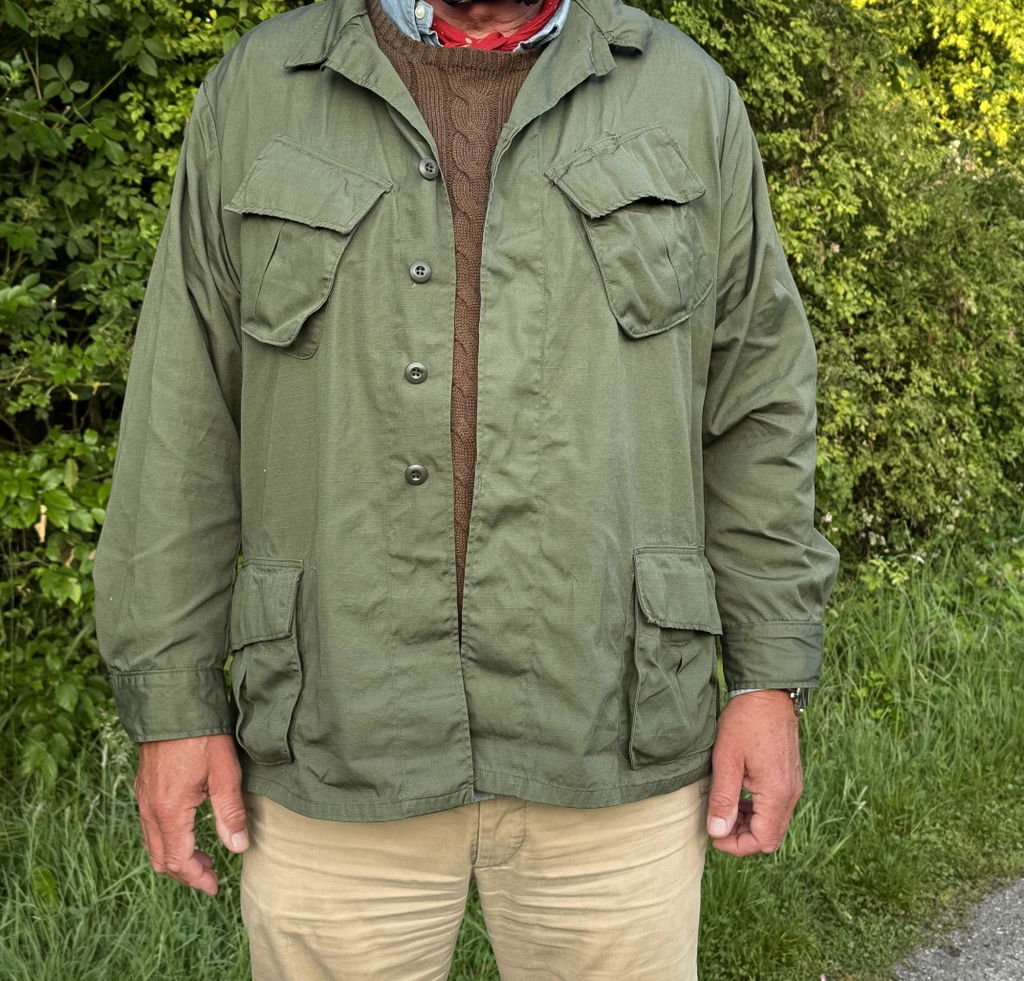
OG-107 (Olive Green)
Standard solid olive drab used throughout the war.
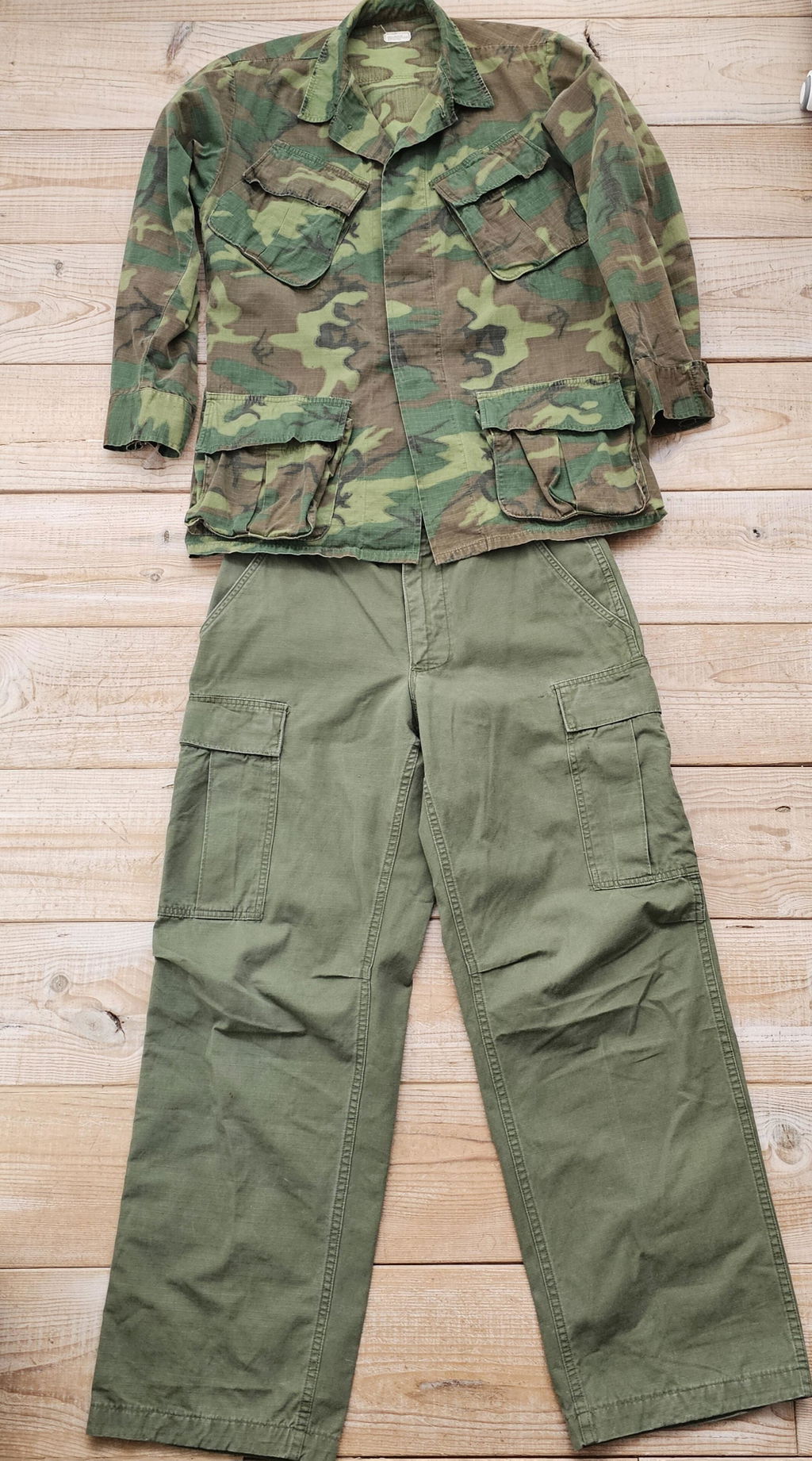
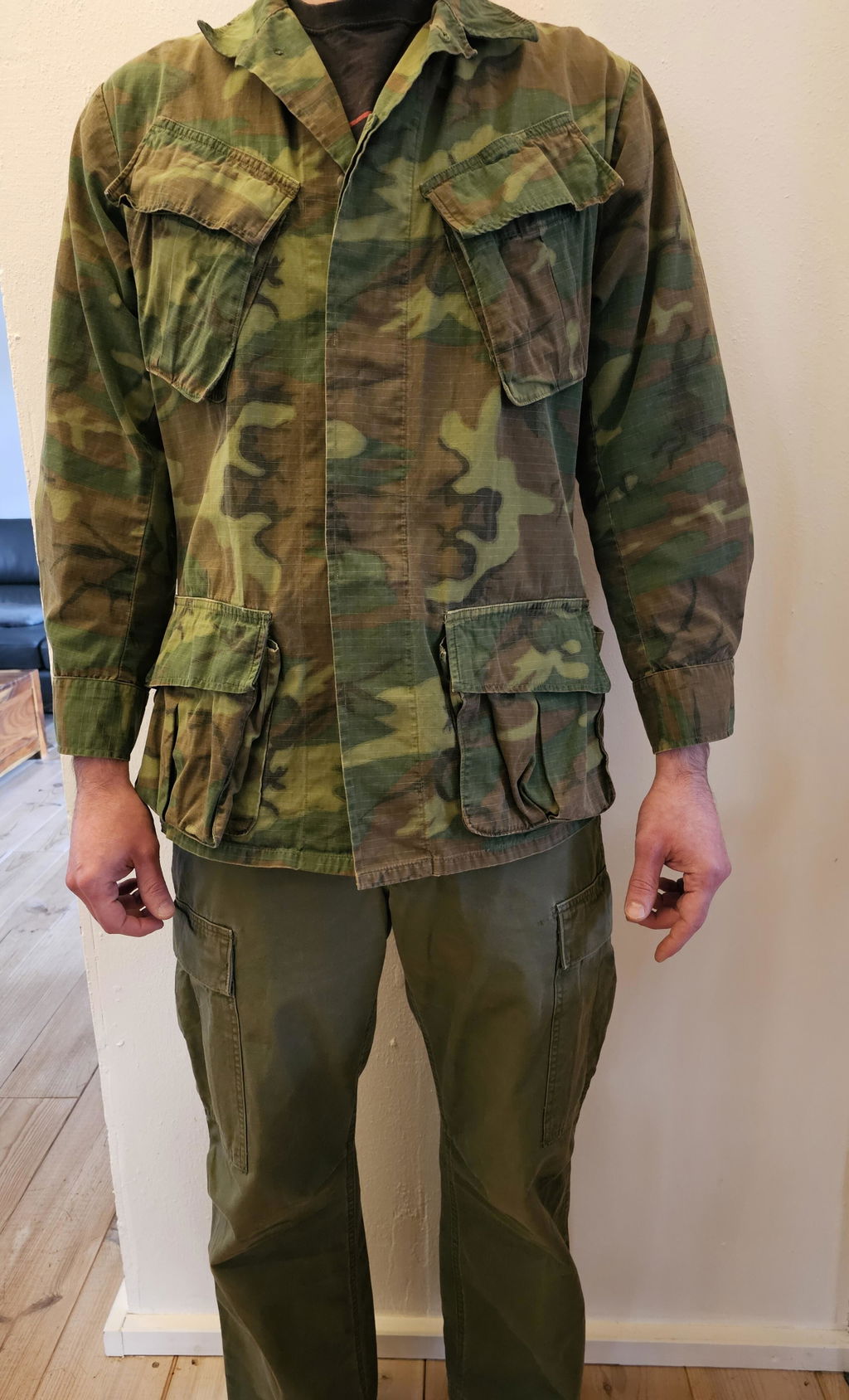
ERDL Camouflage
Four-color leaf pattern:
-
Early green-dominant
-
Later brown-dominant
Ripstop ERDL examples (5th–6th pattern) are particularly desirable among collectors.
Corrected Quick ID Table
| Pattern | Fabric | Fly Type | Drain Holes | Waist Tabs |
|---|---|---|---|---|
| 1st | Poplin | Button | Early none | Botton |
| 2nd | Poplin | Button | Yes | Botton |
| 3rd | Poplin | Button | Yes | Metal |
| 4th | Poplin | Button | Yes | Metal |
| 5th | Ripstop | Button | Yes | Metal |
| 6th | Ripstop | Zipper | Yes | Metal |